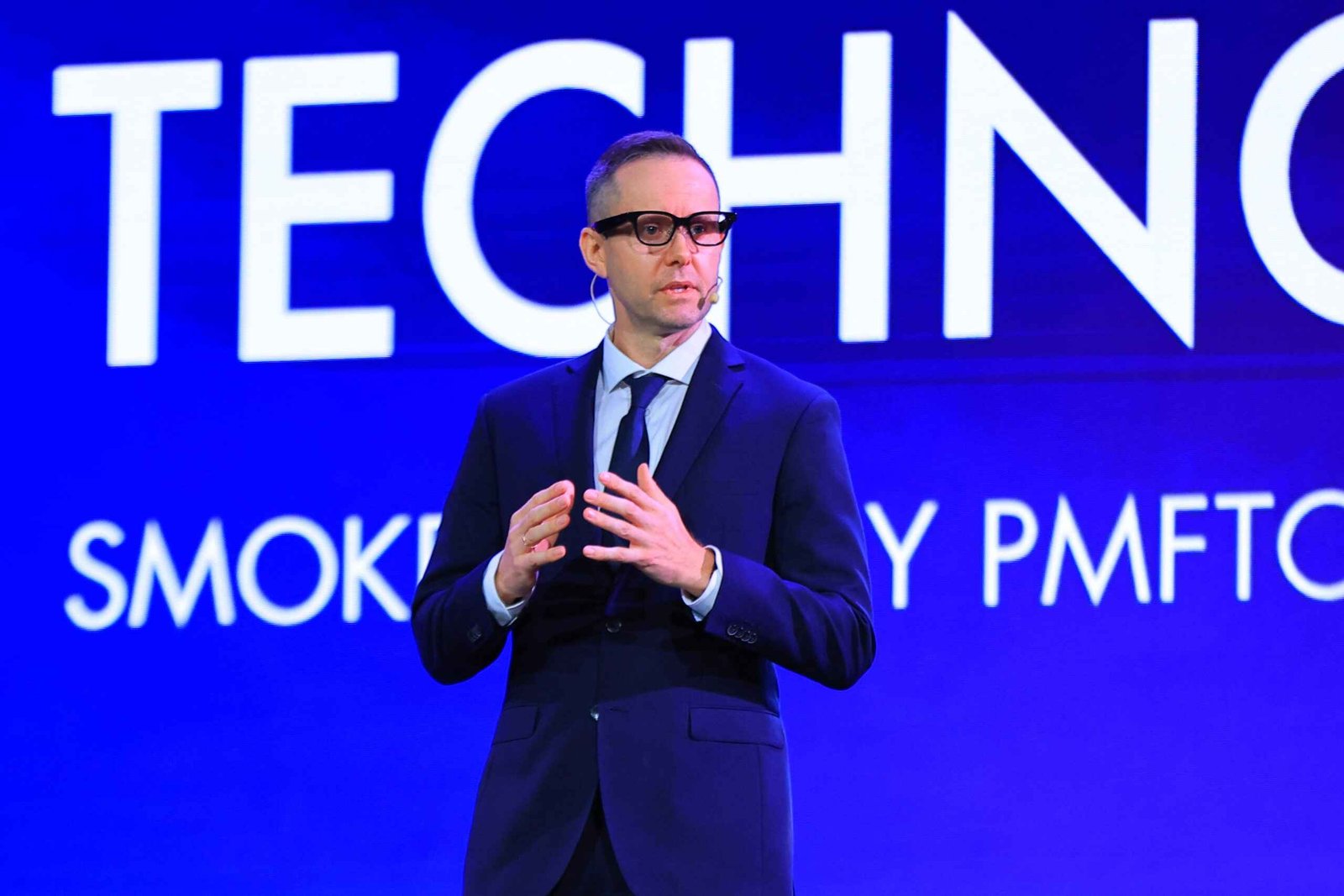
PMFTC Inc. President Zhenya Ivanov delivers his opening remarks during the“TECHNOVATION: Smoke-Free by PMFTC” summit on Tuesday, Nov. 10, 2026, at Manila Marriott Hotel in Pasay City.
Philip Morris International’s (PMI) Philippine affiliate PMFTC Inc. gathered industry leaders, policy specialists, scientists and health experts in Manila on Tuesday to push for science-based regulation and consumer education in transitioning adult smokers away from cigarettes.
The inaugural “TECHNOVATION: Smoke-Free by PMFTC” summit at the Manila Marriott Hotel in Pasay City focused on tobacco harm reduction and product innovation as evidence-based strategies for adult smokers who would otherwise continue using combustible cigarettes.
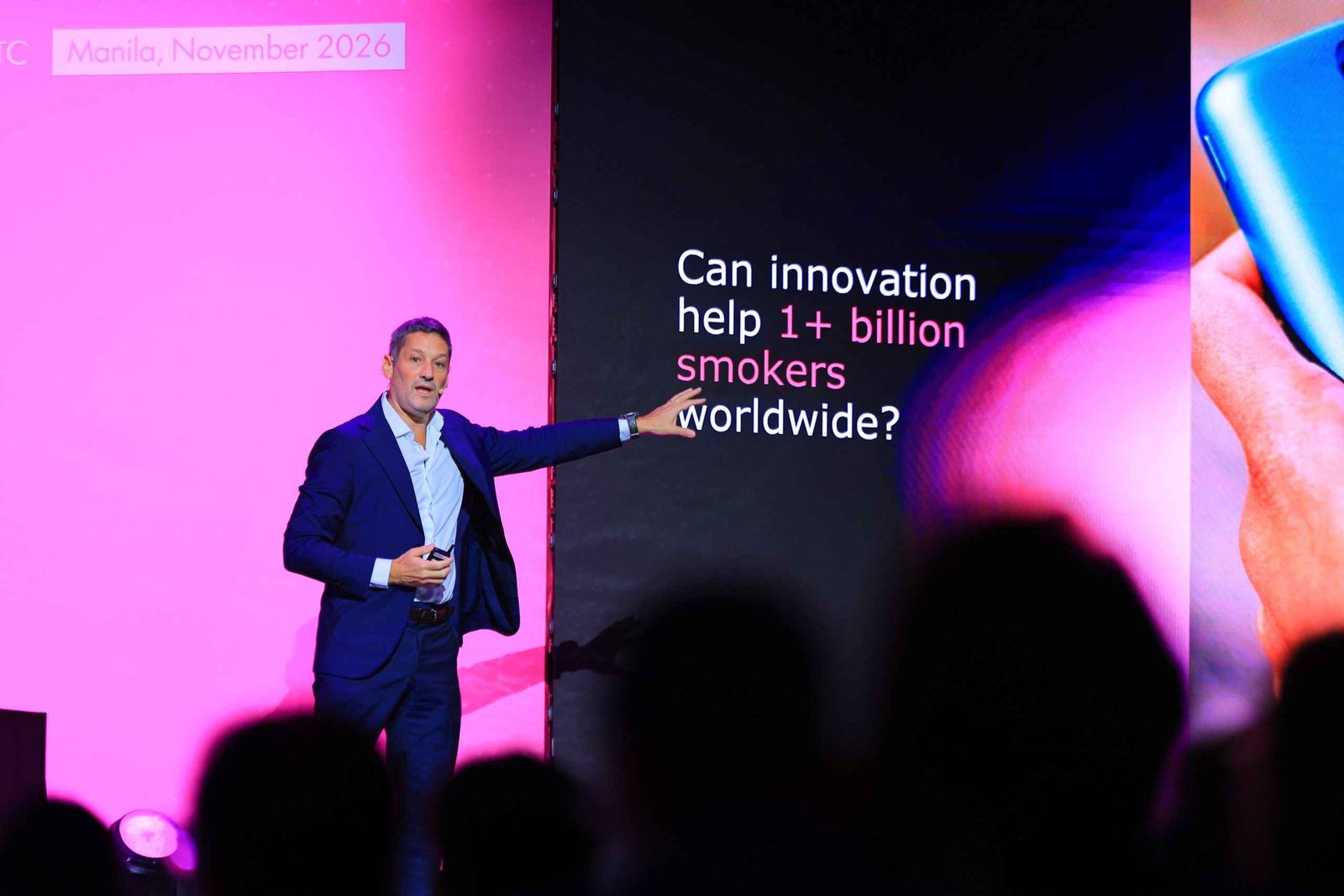
PMI has invested more than $16 billion globally in smoke-free research and development since 2008. Smoke-free net revenues accounted for over 40 percent of the company’s total net revenues as of the third quarter of 2026, with its portfolio reaching 110 markets and serving more than 43 million adult consumers worldwide.
PMI allocates 99 percent of its adjusted R&D spending to its smoke-free business, supported by more than 1,600 specialized R&D professionals.
PMFTC president Zhenya Ivanov said hosting the summit in the Philippines marked a key milestone in the company’s global transformation.
“We have held conversations about science and innovation in different parts of the world. But bringing Technovation to Manila is special to us because the Philippines has an important role to play in our company’s transformation toward a smoke-free future. We want to share not just where we’re headed as a company, but also the science, technology and thinking behind this journey,” Ivanov said.
During a fireside chat with lawyer and television anchor Karen Jimeno, PMI president for East & Southeast Asia, Pacific and Global Travel Retail Vassilis Gkatzelis said differentiated regulation accelerates the shift away from traditional cigarettes.
“What we have seen is that in countries where regulatory frameworks recognize that not all nicotine products are the same, we see a much faster transition to smoke-free alternatives,” Gkatzelis said.
“When you have the combination of access, information, right regulation, and proper enforcement, we see that cigarette smoking declines faster,” he said.
Summit speakers noted that while nicotine is addictive and carries risks, burning tobacco—rather than nicotine itself—generates most of the harmful chemicals linked to smoking-related illnesses.
PMI vice pesident of communications and engagement Tommaso Di Giovanni said technological advancements must deliver tangible societal benefits even when initially met with skepticism.
“The true measure of innovation is the positive difference it can make in people’s lives, not how advanced a technology is. At its best, innovation gives us the power to tackle complex challenges and turn scientific progress into progress for society,” Di Giovanni said.
A panel on science and public health examined how research and evidence-based rules reduce smoking harm. PMI head of scientific engagement for East Asia and Australia Yvonne Khoo moderated the discussion featuring University of Louisville professor emeritus Brad Rodu, public health expert Dr. Sharifa Ezat Wan Puteh, psychiatrist Dr. Tomohiro Shirasaka and urologist Dr. Rogelio Varela Jr.
Swedish trendspotter Magnus Lindkvist also discussed how disruptive technologies shift consumer habits, while PMFTC Senior Director for Smoke-Free Products Vickna Tharmalingam showcased PMI’s multicategory lineup, including the induction-heated IQOS ILUMA i and ZYN nicotine pouches.
In a separate policy session titled “Voices of Change,” PMFTC communications director John Peter Ferdinand Echiverri moderated a discussion on global regulatory frameworks and consumer access with Taxpayers Protection Alliance Consumer Center representative Martin Cullip, Indonesian news outlet Tirto.id journalist Rachmadin Ismail and PMFTC Director for Regulatory and Scientific Affairs Atty. Marco Santiago.
PMFTC senior director for corporate affairs Chita Herce closed the summit by calling for cross-sector collaboration among government, industry and stakeholders to turn scientific progress into effective policy.
“Science can open new possibilities. But we turn innovation into progress only when we work together,” Herce said.
“If today’s conversations have helped us better understand the science, consider new perspectives, or ask more informed questions, then I believe we’ve made a worthwhile start,” said Herce.