
Karl Fagerström, psychiatrist
A Spanish study has found that most consumers turn to nicotine pouches to lessen smoking harm.
Nicotine pouches are smoke-free products that deliver nicotine by placing a small pouch between the gum and upper lip. They do not contain tobacco leaf and produce no smoke or vapor.
The study “Regulation of Nicotine Pouches,” authored by the Tholos Foundation in collaboration with international consultancy Dynata, draws on survey data collected in March 2025 from 515 active nicotine pouch users.
The survey found that if new regulations are implemented, one-third of the respondents would seek illicit sources, and another third would revert to smoking.
Experts such as psychiatrist Karl Fagerström endorse nicotine pouches as harm reduction tools, emphasizing that nicotine without combustion poses fewer risks. They point to Sweden’s success in lowering smoking rates through similar approaches.
The Nicotine Consumers Union of the Philippines (NCUP) welcomed the survey results, which NCUP president Anton Israel said “emphasize the potential public health impact of nicotine pouches, and the need for regulations that embrace a harm reduction approach instead of outright bans.”
Israel said the survey outcomes validate the tobacco harm reduction (THR) framework, which relies on lower-risk products—including vapes, heated tobacco, and nicotine pouches—to address smoking-related harms.
According to Israel, the smoke-free design of these products eliminates burning, thereby reducing exposure to harmful compounds compared with smoking.
He also emphasized that nicotine itself is not the main driver of smoking-related diseases, which largely stem from toxic chemicals created during combustion.
Israel noted that even the UK’s National Health Service explicitly states on its website that “while nicotine is a highly addictive drug, it does not contain toxic chemicals found in cigarettes, including tar and tobacco.”
The NCUP said the Spanish survey results highlight the increasing recognition of nicotine pouches as effective tools for quitting smoking.
Israel pointed out that Sweden achieved the lowest smoking rate in Europe with the aid of nicotine pouches and their predecessor, snus. He added that the Philippines, where pouches are regulated, should consider the Spanish study as strong evidence that alternatives to cigarettes can lower smoking prevalence.
He also cautioned that prohibiting or restricting these products may drive consumers toward the black market, where regulations and taxes are absent.
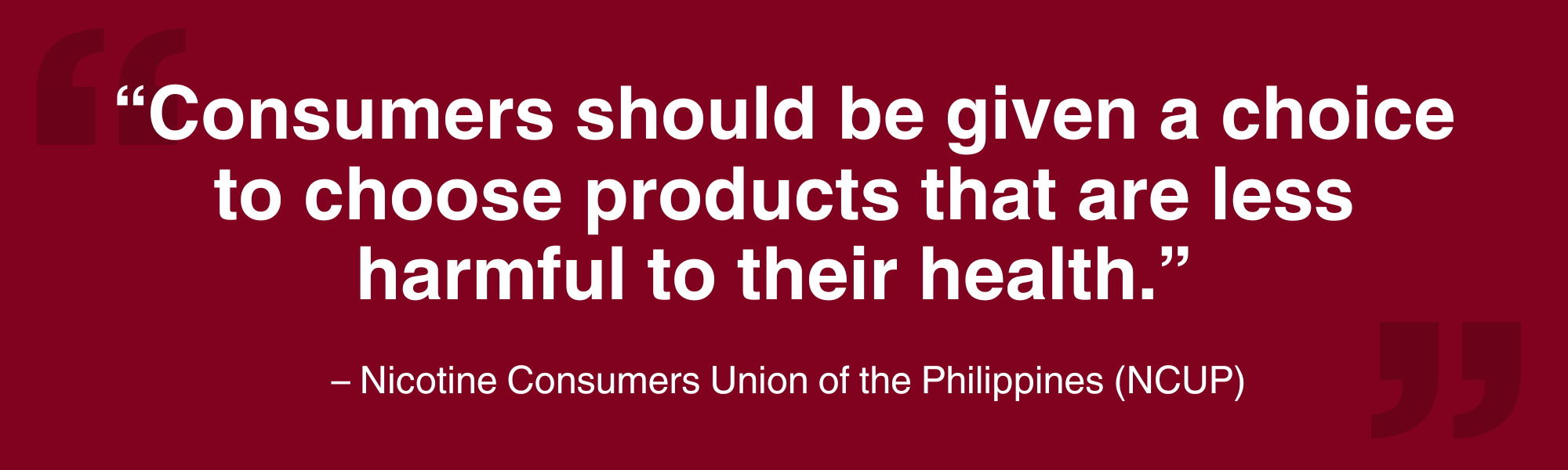
“Consumers should be given a choice to choose products that are less harmful to their health,” he said.
Israel also referenced scientific studies indicating that smoke-free alternatives contain 95% fewer harmful chemicals compared to cigarette smoke.