

John Britton, University of Nottingham Epidemiology Emeritus Professor
Nicotine e-cigarettes are more effective at helping smokers quit than traditional replacement therapies and could significantly reduce tobacco-related death and disability, according to major scientific reviews.
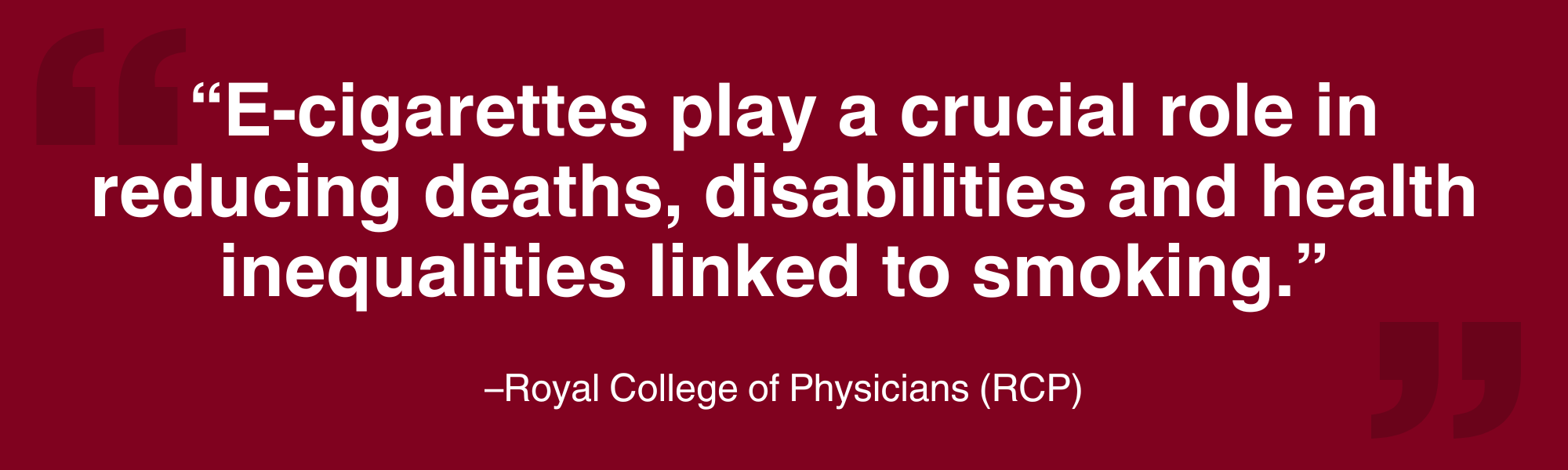
The Royal College of Physicians (RCP) concluded in its report, “E-cigarettes and harm reduction: An evidence review,” that these devices play a crucial role in lowering health inequalities and deaths linked to smoking.
The RCP, which pioneered warnings against smoking in the 1960s, used longitudinal data from multiple countries to determine that regulated vapes reduce exposure to disease-causing chemicals because they do not involve combustion.
Cochrane researchers, who reviewed 104 trials involving more than 30,000 adults, found that nicotine e-cigarettes lead to 8 to 11 successful quitters per 100 users. This outperforms nicotine-replacement products or non-nicotine vapes, which help about 6 per 100 people. Only 4 per 100 individuals successfully quit without any support.
A separate 2022 Cochrane review of 332 studies involving 157,179 adult smokers identified e-cigarettes, varenicline and cytisine as the most effective cessation methods. That analysis suggested that among 100 smokers, 10 to 19 may successfully quit when using e-cigarettes.
“We are confident that e-cigarettes, cytisine, varenicline, nicotine replacement therapy and bupropion help people stop smoking,” the review said.
University of Nottingham Epidemiology Emeritus Professor John Britton said the levels of exposure to carcinogens and oxidants in vapers are very low.
“It is evident from multiple studies published to date that the levels of exposure to carcinogens and oxidants sustained by vapers are very low, indicating that the risks of vaping are likely to be very small. Smokers, in particular, can remain reassured that vaping is far less harmful than smoking,” Britton said.
The findings indicate that nicotine e-cigarettes aid cessation for at least 6 months and are likely superior to nicotine-free alternatives. Most of the data analyzed by researchers originated in the United States and the United Kingdom, where 48 and 21 studies were conducted, respectively.
While experts agree that nicotine e-cigarettes help more people stop smoking than traditional therapy, they noted that more studies are still needed to confirm the long-term impact of nicotine-free e-cigarettes.
Beyond vapes, smoke-free products such as heated tobacco devices and nicotine pouches also reduce the release of harmful chemicals by avoiding the combustion process. Despite the clear benefits for current smokers, the RCP cited the need to discourage uptake among youth and non-smokers while promoting vapes as an essential tool for those struggling to quit.