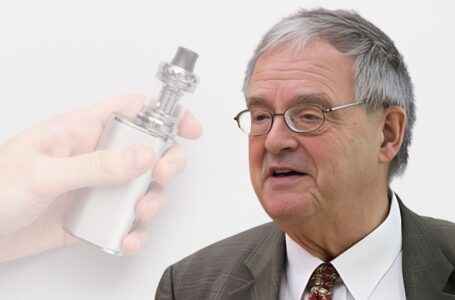

Committee Chairman Miro Quimbo
Philippine government agencies are supporting a streamlined excise tax system on vapor products to address enforcement challenges and significant revenue losses caused by the current two-tier tax structure.
During a House Ways and Means Committee hearing on Monday, officials from the Bureau of Internal Revenue (BIR), Bureau of Customs (BOC) and Department of Trade and Industry (DTI) supported a unified tax rate. The agencies reported that the existing distinction between nicotine salt and freebase nicotine has led to widespread misdeclaration and technical gaps in tax administration.
Under the current system, nicotine salt vapes are taxed at P60.20 per milliliter, while freebase nicotine products are taxed at P6.95 per milliliter. Representative and House Ways and Means Committee Chairman Miro Quimbo said reforming this structure is a top priority, as lawmakers consider several bills aimed at restructuring these excise taxes.

House Bill 5212 author and Senior Deputy Speaker Ferdinand Hernandez argued that the current framework is no longer viable. “The two-tier system has opened the door to misdeclaration and loopholes, costing us P14.84 billion in lost revenues in allowing products to circulate without proper oversight. Two liquids that look and function the same should not be taxed differently,” Hernandez said.
The BIR and BOC admitted they lack the technical capacity to chemically verify whether a product contains nicotine salt or freebase nicotine. This limitation coincides with official tax data showing that salt nicotine products effectively vanished from records in 2024 and 2025, with companies reporting zero withdrawals and shifting to freebase nicotine declarations.
Department of Finance Undersecretary Carlo Adriano said that while revenue from vapor products is projected to exceed P2.3 billion in 2025, the sudden drop in salt nicotine removals suggests a large-scale shift to the lower-taxed category. The BIR confirmed that salt nicotine removals fell to effectively zero in early 2025, prompting concerns that companies are exploiting the lower freebase tax tier.
Health regulators, including the Department of Health (DOH) and the Food and Drug Administration (FDA), clarified that there is no scientific evidence suggesting one form of nicotine is significantly more harmful than the other to justify the current tax disparity.
The hearing revealed a “loop of dependence” among agencies, where the BOC relies on DTI documentation and the BIR issues tax stamps based on company self-declarations. Because technical classification is not verified through chemical testing, the committee concluded that a unified excise tax rate is the only enforceable method to ensure equitable taxation and support public health objectives.
House Bill 5207 author and Deputy Speaker Kristine Singson-Meehan noted that the measure seeks to plug the excise tax loophole while advancing public health goals.